Poke Express:
Service & Menu Redesign
Poke Express:
Service & Menu Redesign
This case study explores a holistic redesign of a restaurant’s visual system, treating the physical menu as an interactive interface to reduce cognitive load for a multi-ethnic clientele and streamline high-traffic service flows.
This case study explores a holistic redesign of a restaurant’s visual system, treating the physical menu as an interactive interface to reduce cognitive load for a multi-ethnic clientele and streamline high-traffic service flows.
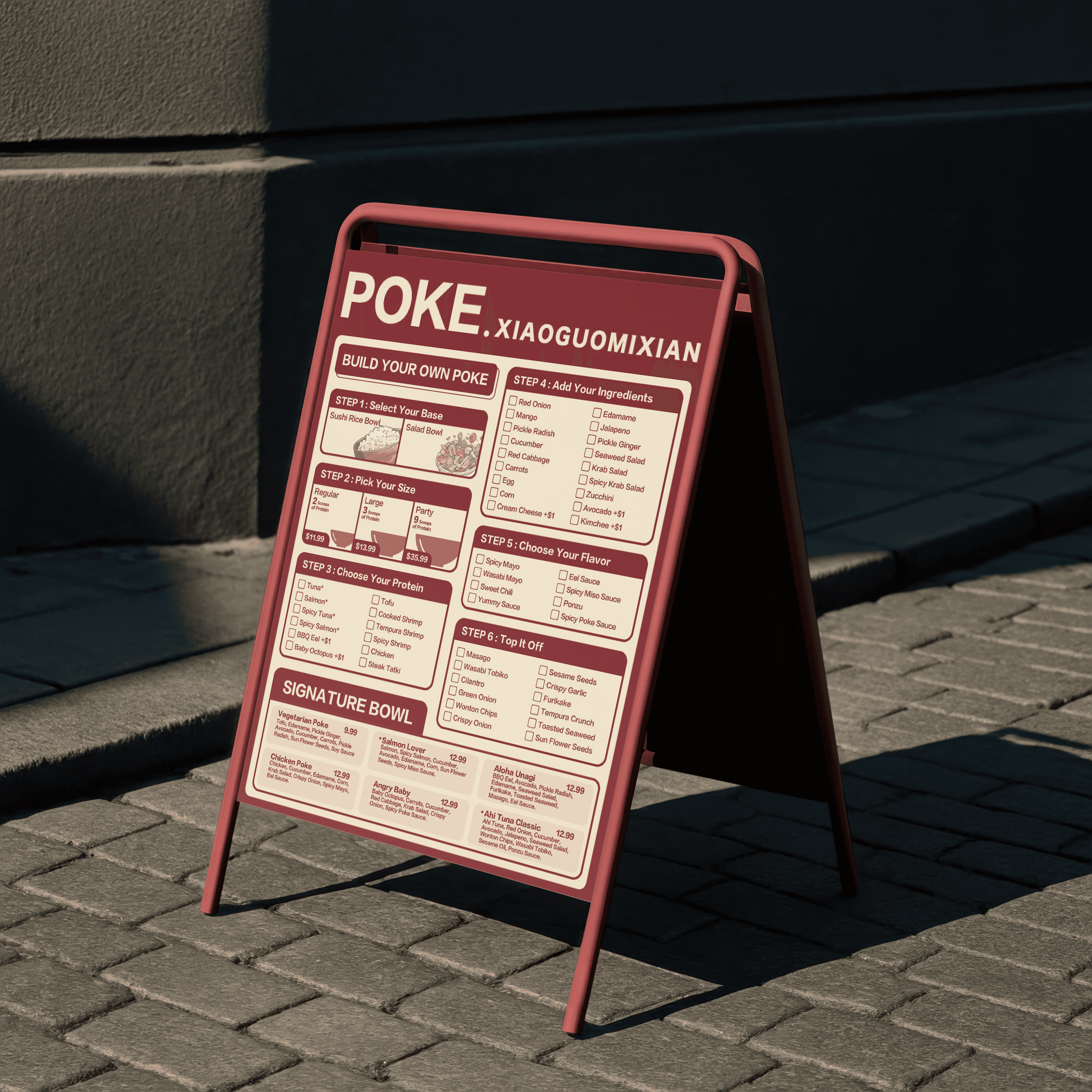
Role & Scope
Service & Menu Redesign · UX/UI + Visual Strategy · Solo project
Deliverables: Service flow, information architecture, interactive menu design, environmental signage, marketing campaign, business impact study
Service & Menu Redesign · UX/UI + Visual Strategy · Solo project
Deliverables: Service flow, information architecture, interactive menu design, environmental signage, marketing campaign, business impact study
The Friction: Conflict
The Friction: Conflict
Communication
Communication
Non-native English speakers experience significant pressure and frustration when navigating complex, text-heavy menu options.
Non-native English speakers experience significant pressure and frustration when navigating complex, text-heavy menu options.
Efficiency
Efficiency
Manual order-taking by staff leads to high error rates and prolonged service latencies during peak operational hours.
Manual order-taking by staff leads to high error rates and prolonged service latencies during peak operational hours.
Perception
Perception
The coexistence of three distinct cuisines creates cognitive clutter, preventing new customers from quickly identifying the restaurant’s core offerings.
The coexistence of three distinct cuisines creates cognitive clutter, preventing new customers from quickly identifying the restaurant’s core offerings.
The Interaction: Menu as UI
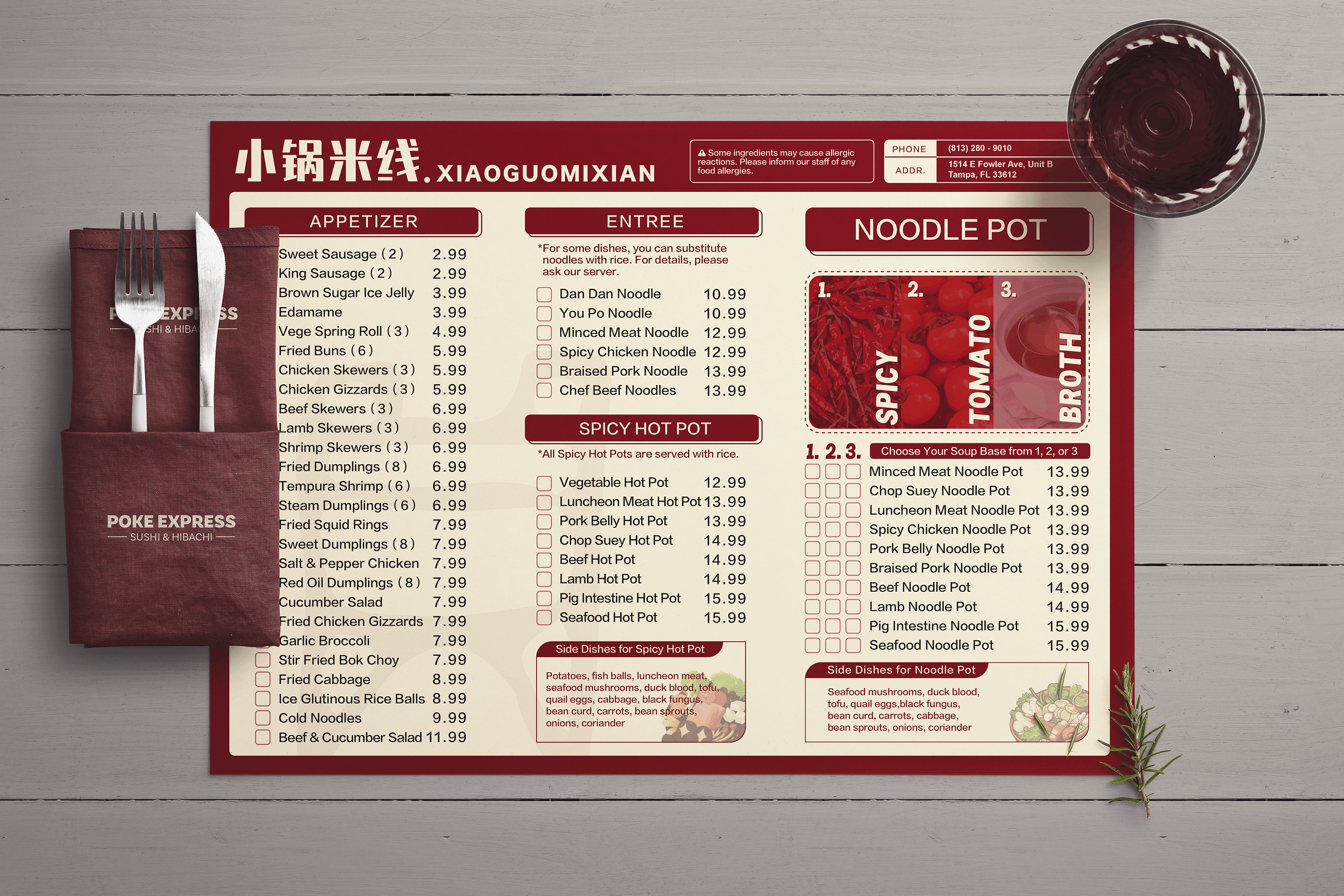
"The menu was redesigned not as a piece of paper, but as an analog tablet."
To bridge the communication gap, I introduced a laminated, marker-based interaction system. This allows customers to directly 'input' their preferences onto the physical interface, creating a seamless feedback loop between the diner and the kitchen.
By applying UI heuristics to a physical medium—such as step-by-step guided navigation and bilingual information hierarchy—we successfully reduced cognitive load for a multi-ethnic audience. The result is a frictionless ordering experience that functions independently of the server’s linguistic ability.
The Interaction: Menu as UI
"The menu was redesigned not as a piece of paper, but as an analog tablet."
To bridge the communication gap, I introduced a laminated, marker-based interaction system. This allows customers to directly 'input' their preferences onto the physical interface, creating a seamless feedback loop between the diner and the kitchen.
By applying UI heuristics to a physical medium—such as step-by-step guided navigation and bilingual information hierarchy—we successfully reduced cognitive load for a multi-ethnic audience. The result is a frictionless ordering experience that functions independently of the server’s linguistic ability.
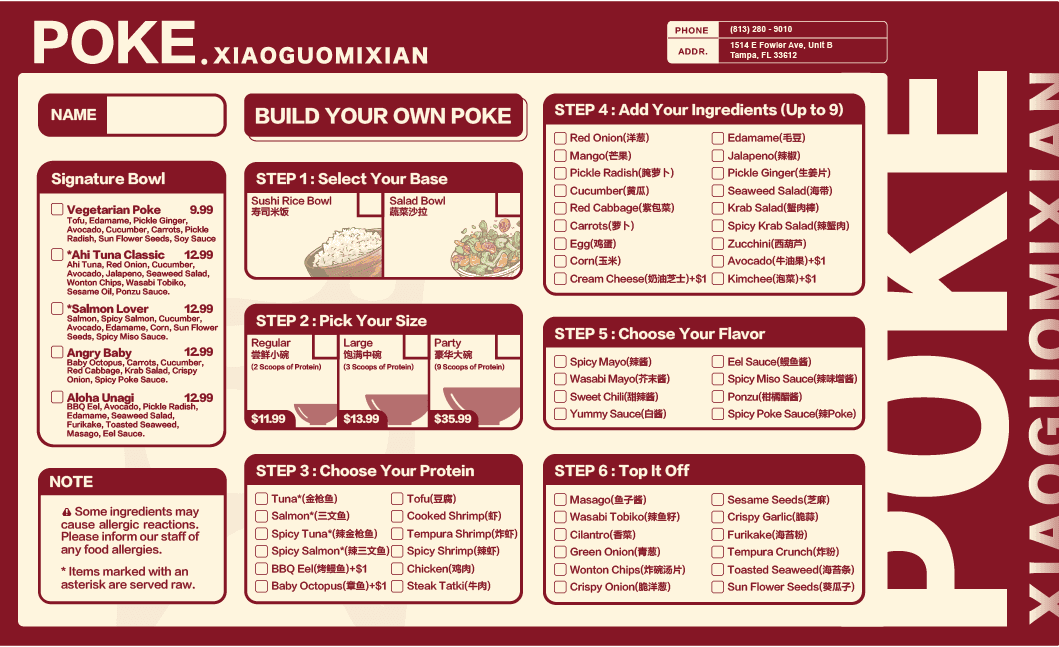
Poke Menu
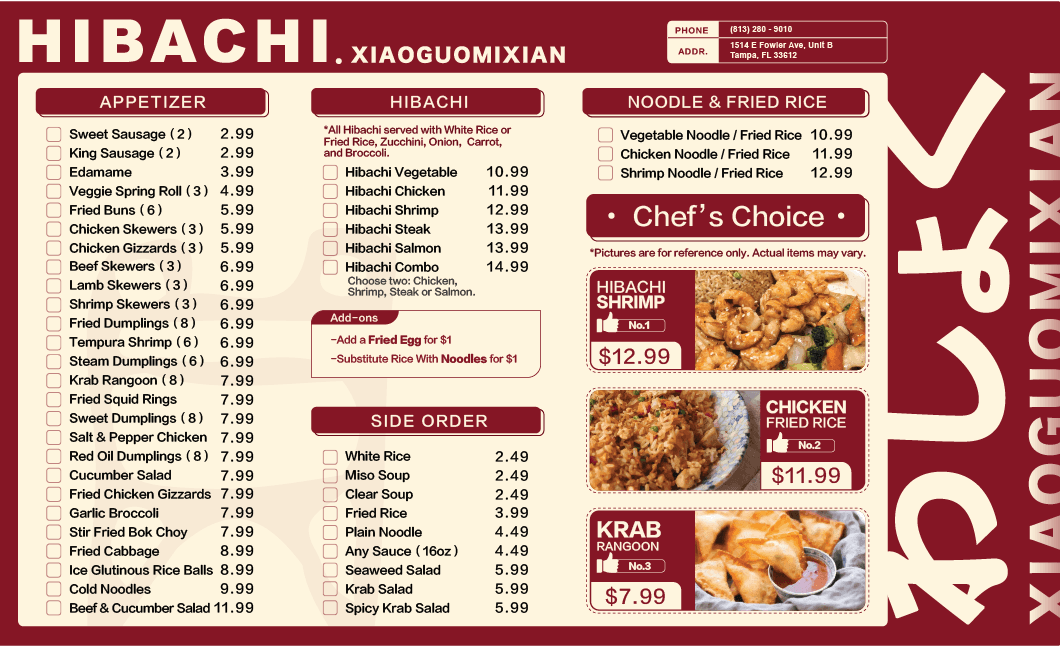
Hibachi Menu
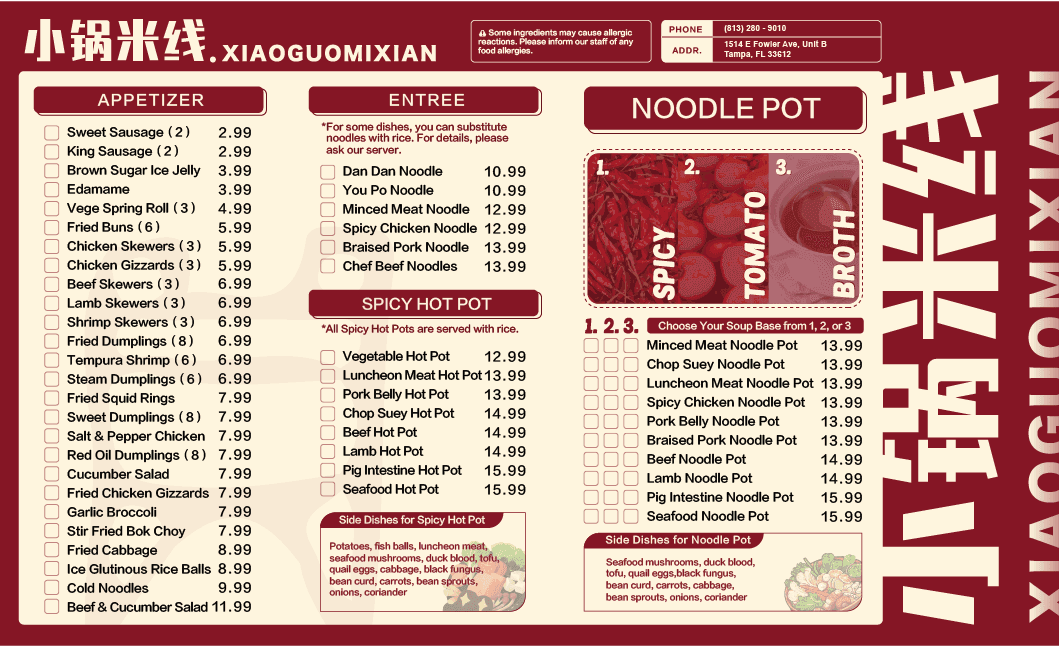
Noodle Menu