DoorDash Merchant Redesign
DoorDash Merchant Redesign
A comprehensive redesign of the DoorDash merchant experience, focusing on reducing cognitive load during peak hours and resolving complex order conflicts with a transparent, merchant-centric logic.

Role & Scope
Concept Redesign · UX/UI + Visual Design · Solo Project
Deliverables: Interactive user flow, hierarchical wireframes, design rationale, final UI system
Current Merchant UI
Current Merchant UI
Current Merchant UI
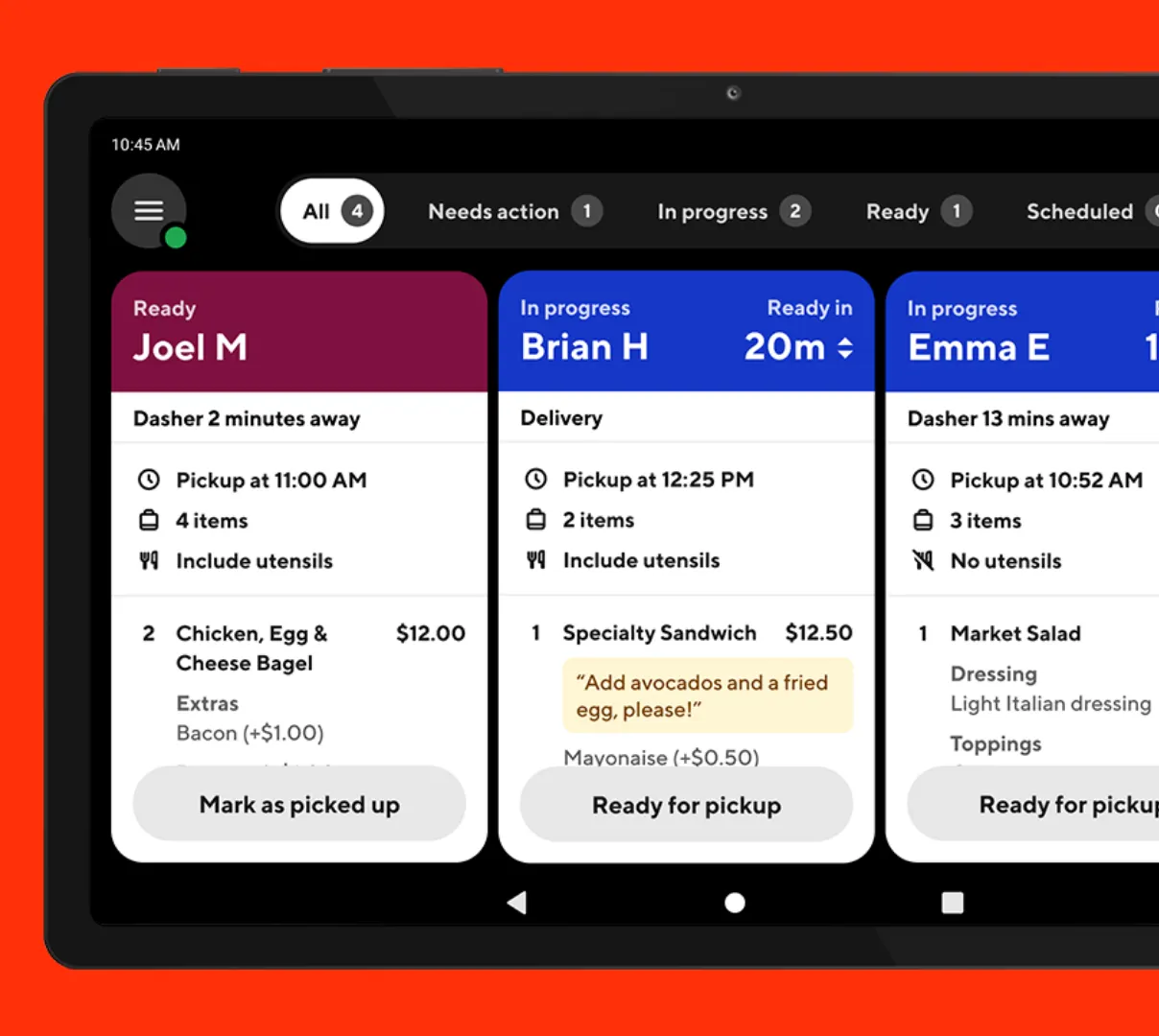
Information-heavy without hierarchy: Merchants are forced to navigate through dense lists, creating significant cognitive load during peak hours.
Information-heavy without hierarchy: Merchants are forced to navigate through dense lists, creating significant cognitive load during peak hours.
Information-heavy without hierarchy: Merchants are forced to navigate through dense lists, creating significant cognitive load during peak hours.
The Core Pain Points
The Core Pain Points

Operational Chaos
Operational Chaos
Operational Chaos
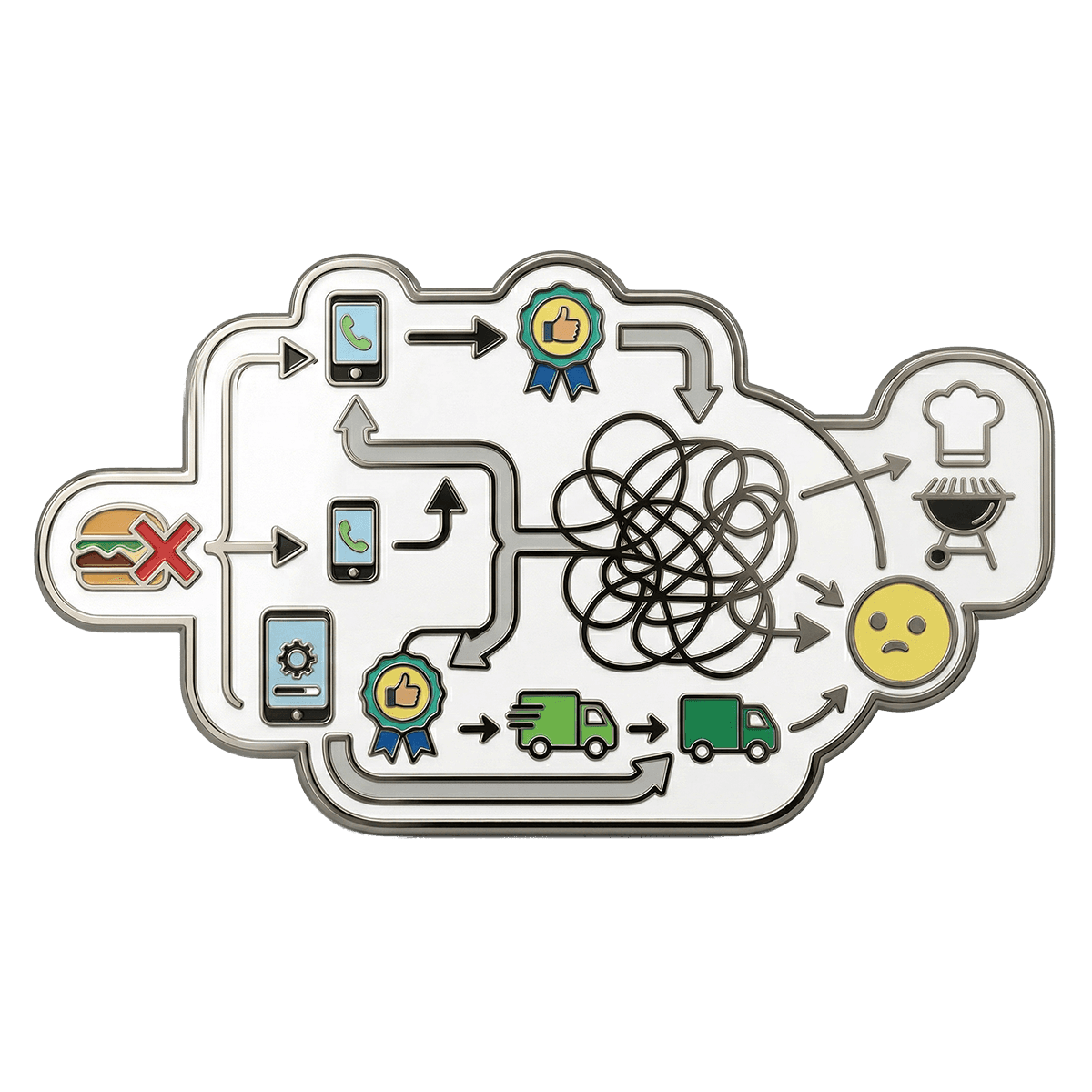
High-volume peak hours lead to cognitive overload; current layouts fail to prioritize urgent orders and rider status.
High-volume peak hours lead to cognitive overload; current layouts fail to prioritize urgent orders and rider status.
High-volume peak hours lead to cognitive overload; current layouts fail to prioritize urgent orders and rider status.
Rigid Workflows
Rigid Workflows
Rigid Workflows
Resolving order conflicts (out-of-stock items) requires too many steps, distracting staff from food preparation.
Resolving order conflicts (out-of-stock items) requires too many steps, distracting staff from food preparation.
Resolving order conflicts (out-of-stock items) requires too many steps, distracting staff from food preparation.

Financial Opacity
Financial Opacity
Financial Opacity
Merchants lack real-time payout transparency during item modifications and refunds, creating a "black box" accounting experience.
Merchants lack real-time payout transparency during item modifications and refunds, creating a "black box" accounting experience.
Merchants lack real-time payout transparency during item modifications and refunds, creating a "black box" accounting experience.
Streamlining the Complexity
Streamlining the Complexity
Streamlining the Complexity
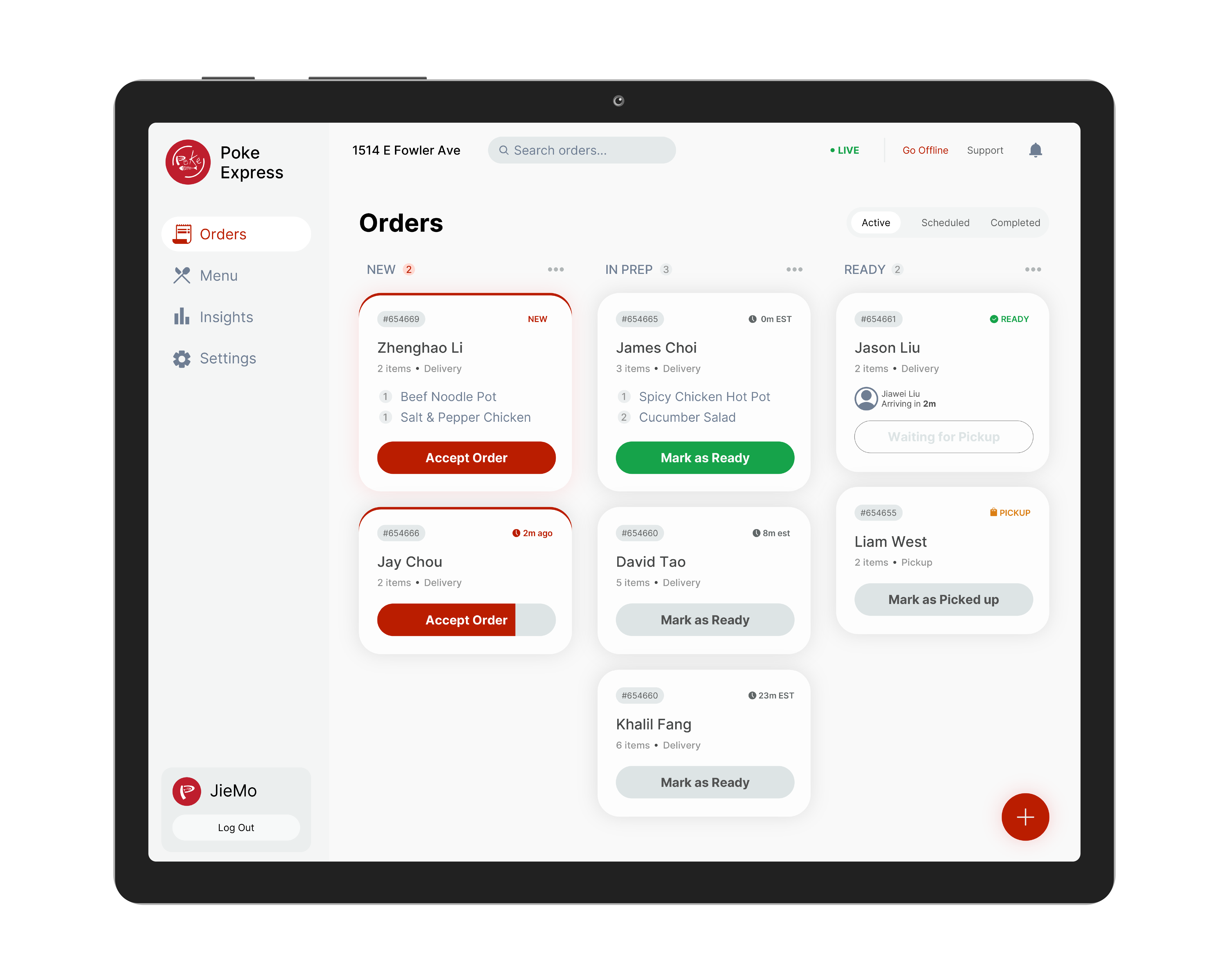
Restructuring the tablet dashboard into a Three-Column Status System to mirror the physical kitchen workflow: New, In-Prep, and Ready.
Restructuring the tablet dashboard into a Three-Column Status System to mirror the physical kitchen workflow: New, In-Prep, and Ready.
Architecting Clarity: Modular Order Cards
Architecting Clarity: Modular Order Cards
Architecting Clarity: Modular Order Cards
From wireframe structure to visual execution, optimizing the hierarchical display of order details, urgency, and operational status on a shared atomic structure.
From wireframe structure to visual execution, optimizing the hierarchical display of order details, urgency, and operational status on a shared atomic structure.

Dynamic Conflict Resolution
Dynamic Conflict Resolution
Dynamic Conflict Resolution
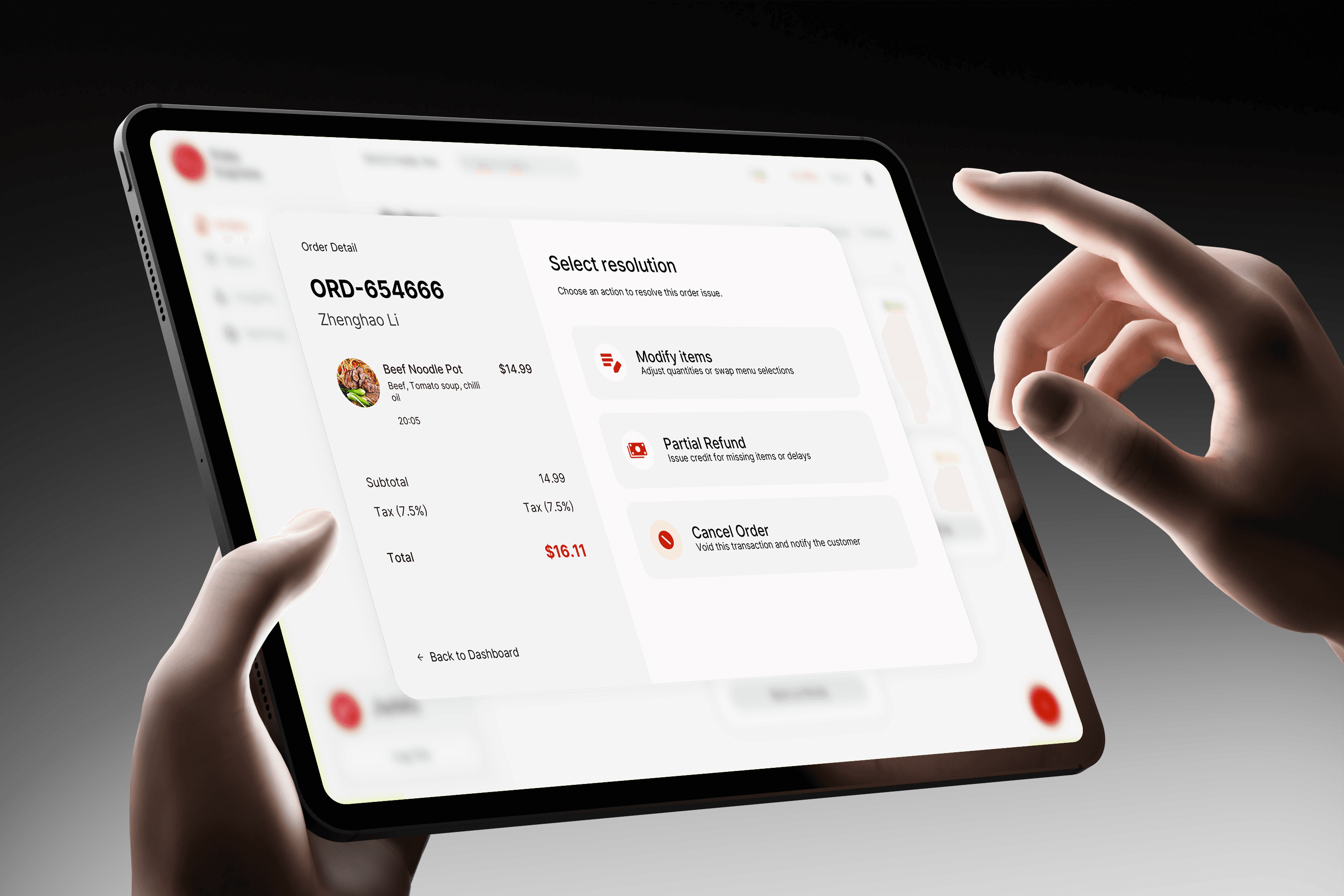
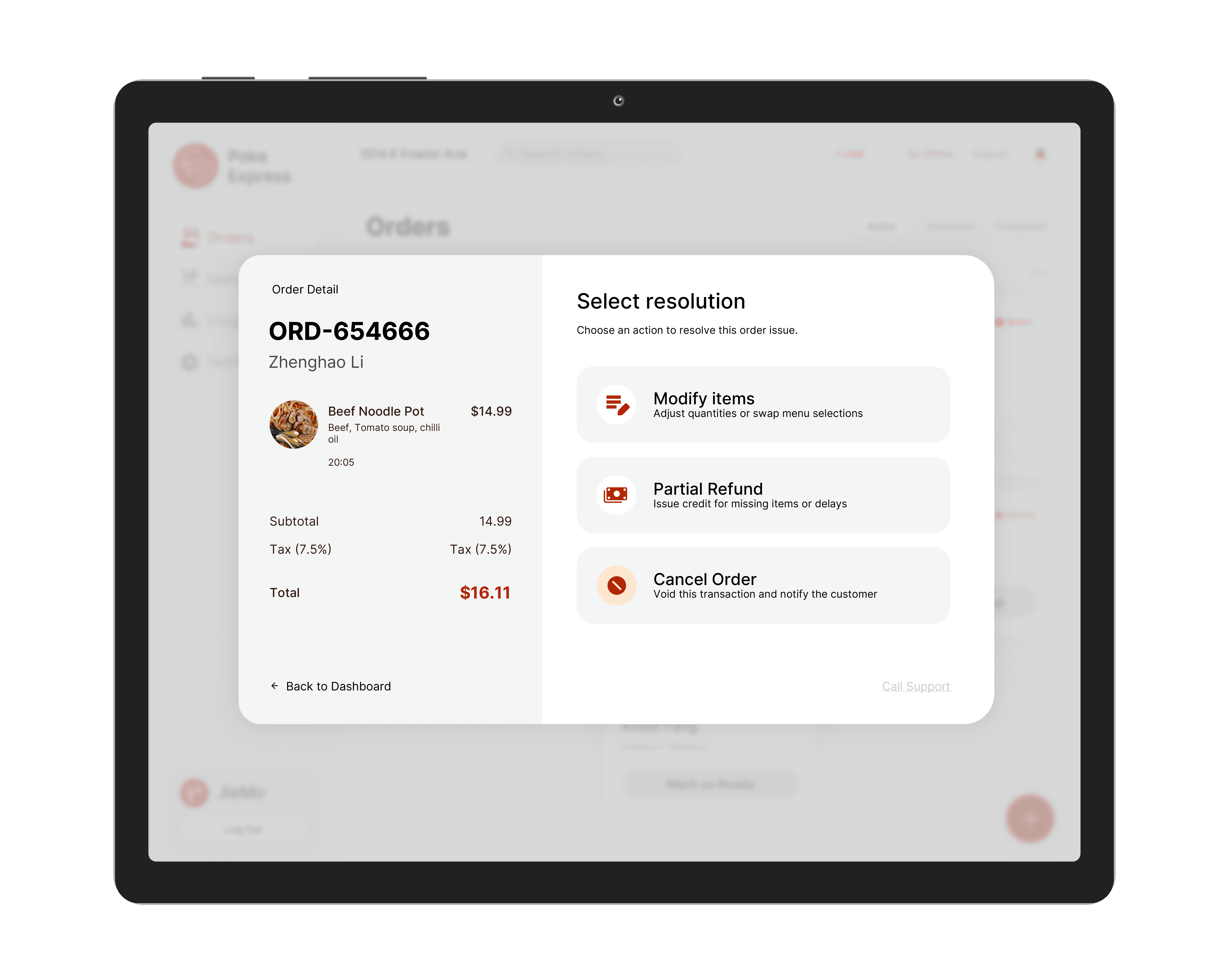
Contextual Clarity (Left):
Keep the original order data visible on the left to provide
context, ensuring the merchant doesn't have to memorize
details while making decisions.
Contextual Clarity (Left):
Keep the original order data visible on the left to provide
context, ensuring the merchant doesn't have to memorize
details while making decisions.
Contextual Clarity (Left):
Keep the original order data visible on the left to provide
context, ensuring the merchant doesn't have to memorize
details while making decisions.
Actionable Alternatives (Right):
Three distinct, high-contrast paths (Modify, Refund, Cancel)
designed for quick selection in a high-pressure kitchen
environment.
Actionable Alternatives (Right):
Three distinct, high-contrast paths (Modify, Refund, Cancel)
designed for quick selection in a high-pressure kitchen
environment.
Actionable Alternatives (Right):
Three distinct, high-contrast paths (Modify, Refund, Cancel)
designed for quick selection in a high-pressure kitchen
environment.
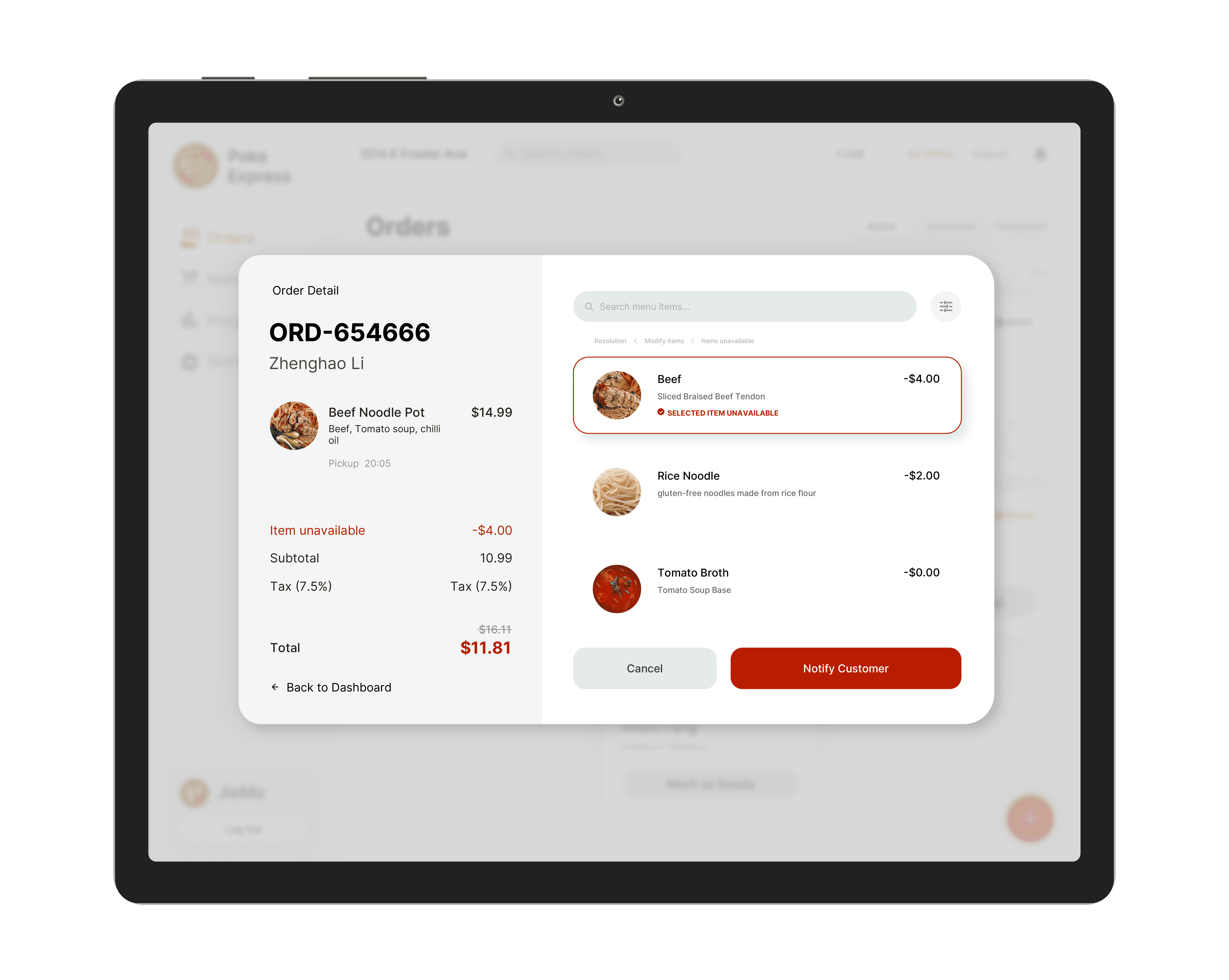
Automatic Price Adjustment
The system instantly calculates the price difference, including tax and service fee adjustments, ensuring both the customer and merchant are billed correctly.
Automatic Price Adjustment
The system instantly calculates the price difference, including tax and service fee adjustments, ensuring both the customer and merchant are billed correctly.
Automatic Price Adjustment
The system instantly calculates the price difference, including tax and service fee adjustments, ensuring both the customer and merchant are billed correctly.
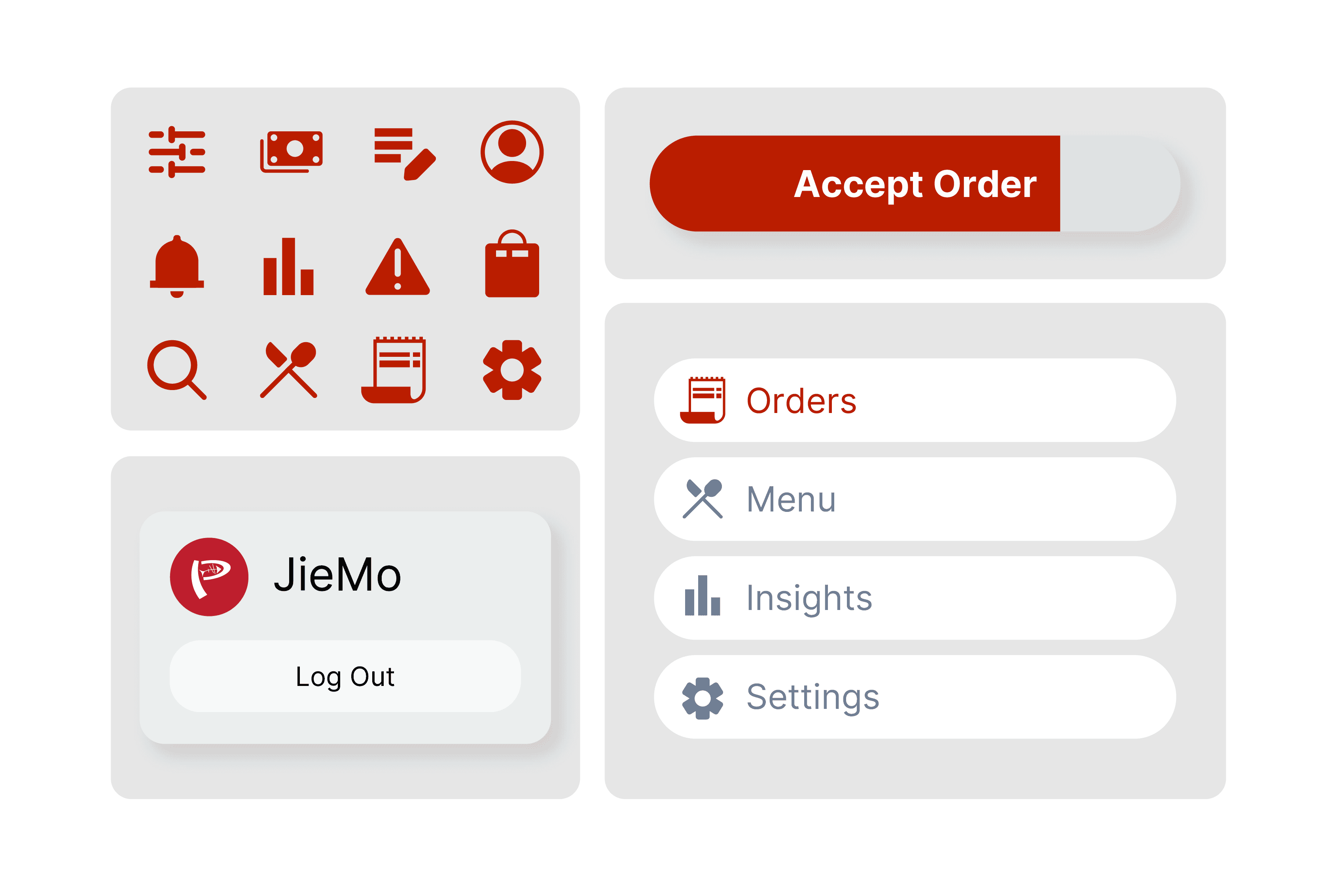
Crafting the Visual Language
Beyond pure logic, I engineered a cohesive visual system that borrows the cognitive ergonomics of iPadOS design patterns. By utilizing SF Pro typography for its exceptional legibility, I optimized every component for instant recognition and high 'touch-targets'—ensuring the system remains frictionless even in the high-pressure, fast-paced environment of a professional kitchen.
Crafting the Visual Language
Beyond pure logic, I engineered a cohesive visual system that borrows the cognitive ergonomics of iPadOS design patterns. By utilizing SF Pro typography for its exceptional legibility, I optimized every component for instant recognition and high 'touch-targets'—ensuring the system remains frictionless even in the high-pressure, fast-paced environment of a professional kitchen.
Crafting the Visual Language
Beyond pure logic, I engineered a cohesive visual system that borrows the cognitive ergonomics of iPadOS design patterns. By utilizing SF Pro typography for its exceptional legibility, I optimized every component for instant recognition and high 'touch-targets'—ensuring the system remains frictionless even in the high-pressure, fast-paced environment of a professional kitchen.